


A survival guide for the chronically overprepared and perpetually nervous
You’re Overthinking It (But That’s Exactly Why This Matters)
Listen up, future wanderer. Right now, you’re probably staring at your bedroom floor covered in what looks like the aftermath of a REI explosion—three different types of rain jackets, enough underwear to clothe a small village, and that sleeping bag you bought five years ago but have never actually used. You’re about to embark on your first real solo adventure: a three-day weekend trip. And you’re absolutely terrified you’ll forget something crucial and end up naked, starving, and lost in some godforsaken place eating tree bark while crying into your empty water bottle.
Here’s the thing nobody tells you: The art of packing isn’t about bringing everything you might need. It’s about bringing everything you actually need while maintaining enough dignity to not look like a homeless turtle when you arrive at your destination.
The Foundation: Your Base Layer Philosophy
Forget what your mother taught you about packing. She’s the same person who travels with seven pairs of shoes for a weekend in the mountains. This is about building a kit that’s lean, mean, and smart enough to handle whatever adventure you’re brave enough to stumble into.
The Golden Rule: If you can’t carry it for 20 minutes without wanting to abandon it on the side of the road, you don’t need it.
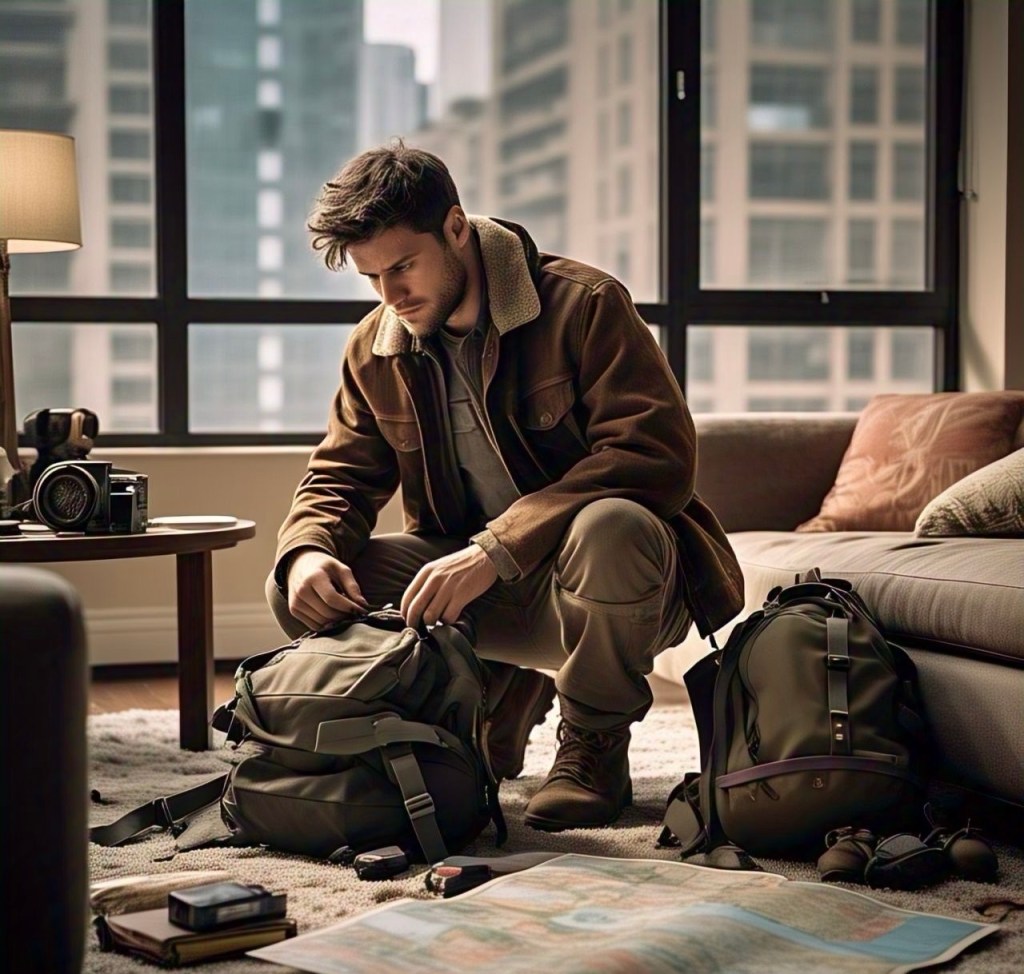
Start with your base: one pair of pants that can transition from hiking trail to dive bar without making you look like you just escaped from a camping catalog. Dark jeans or technical pants work. Khakis do not, unless you’re cosplaying as someone’s disappointed father.
Two shirts maximum. One that can handle getting dirty, one that can handle getting you into places where they check if your shirt has pit stains. Both should be made of materials that don’t hold onto your funk like a desperate ex-girlfriend.
The Forgotten Art of Strategic Layering
Here’s where most people lose their minds: outerwear. You don’t need a jacket for every possible weather scenario. You need one jacket that laughs in the face of uncertainty. A good softshell or light down jacket will handle 90% of what nature throws at you. The other 10% is either so extreme you shouldn’t be out in it anyway, or so mild you don’t need a jacket at all.
Pro tip from the road: That fancy hardshell you spent three paychecks on? Leave it at home unless you’re planning to summit something that requires ropes. For most weekend trips, you’re more likely to need protection from bar smoke than blizzard conditions.
Shoes: The Make-or-Break Decision
This is where anxiety-ridden first-timers really lose it. “What if I need hiking boots AND dress shoes AND sneakers AND flip-flops?” Stop. Breathe. You’re going for three days, not relocating to Mars.
One pair of versatile shoes that can handle walking, light hiking, and looking respectable in public. Trail runners or clean sneakers work. If you’re going somewhere that requires actual hiking boots, you probably already know that and don’t need this article.
Pack one backup pair—something light like canvas shoes or sandals. Not because you’ll definitely need them, but because having them will stop your brain from catastrophizing about “what if my shoes get wet/muddy/stolen by raccoons.”
The Toiletry Trap and How to Escape It
Every first-time traveler makes the same mistake: they pack like they’re never going to see a pharmacy again. News flash: they have stores where you’re going. They probably even have toothbrushes and soap.
Stick to the essentials: toothbrush, toothpaste, deodorant, face wash, and whatever prescription medications keep you functional. Everything else can be acquired on the road if needed. Yes, even that special conditioner that supposedly makes your hair look like you’re in a shampoo commercial.
Electronics: The Modern Survival Kit
Phone, charger, portable battery. That’s it. Unless your phone is held together with electrical tape and prayers, you don’t need a backup camera, tablet, laptop, and GPS unit.

Download offline maps before you go. Trust us on this one. There’s nothing quite like losing cell service and realizing your navigation strategy was “hope for the best.”
The Wild Card Items That Actually Matter
Here’s where we separate the tourists from the travelers: the small things that make a huge difference.
A good water bottle. Not a decorative one, not a plastic one that tastes like disappointment, but a real water bottle that you’ll actually use.
Cash. Actual paper money. Small towns, food trucks, and the best dive bars often don’t take cards, and nothing kills adventure vibes like hunting for an ATM.
A small flashlight or headlamp. Your phone light counts until your battery dies at the exact moment you need to find your tent zipper in the dark.
Local Intelligence: Do Your Homework
Before you go, spend ten minutes researching what makes your destination special. Not the tourist traps—the real stuff. The bourbon distillery hidden in someone’s barn. The breakfast burrito place that only locals know about. The historical marker everyone drives past but nobody reads.
These discoveries don’t happen by accident; they happen because you cared enough to look.
The Hard Truth About Travel Anxiety
Your anxiety isn’t about forgetting your phone charger or packing the wrong jacket. It’s about stepping outside your comfort zone and trusting yourself to handle whatever happens. The scary truth? You probably will handle it. People have been traveling with far less than what you’re packing for thousands of years, and most of them survived to tell stories about it.
The deep cut reality: Every experienced traveler has at least one story about the time they were completely unprepared for something and figured it out anyway. These aren’t cautionary tales—they’re proof that resourcefulness matters more than gear.
The Psychology of the Pack
Here’s what veteran travelers know but rarely admit: packing light isn’t just about convenience. It’s about forcing yourself to be adaptable. When you can’t solve every problem with stuff you brought from home, you have to engage with where you are. You talk to locals. You improvise. You become the kind of person who travels instead of the kind who visits.
The goal isn’t to become a minimalist monk who travels with nothing but a toothbrush and unwavering optimism. The goal is to pack smart enough that your gear enables adventure instead of weighing it down.
The Final Pre-Flight Check
Before you zip up that bag, ask yourself: “If I lost everything except what’s in my pockets, could I still have a good time?” If the answer is no, you might be depending too much on your stuff and not enough on your ability to figure things out.
Pack like someone who expects good things to happen. Pack like someone who isn’t afraid of a little dirt under their fingernails or an unexpected detour. Pack like someone who understands that the best stories usually start with “Well, we didn’t plan for this, but…”
The Inevitable Reality Check
And here’s the brutally honest ending: No matter how perfectly you pack, you’re going to forget something important. Maybe it’s your phone charger. Maybe it’s underwear. Maybe it’s your sense of direction.
But here’s the beautiful, terrifying, absolutely liberating truth—it doesn’t matter. You’ll figure it out. You’ll buy a new charger, go commando, or ask someone for directions. And years from now, that thing you forgot won’t be part of your travel story. What you’ll remember is the moment you realized you could handle it. The moment you stopped being someone who might travel someday and became someone who does.
So pack your bag, check it twice, then go anyway. Adventure doesn’t wait for perfect preparation, and neither should you.
And worst case scenario? There’s probably a convenience store where you’re going. They’re surprisingly good at stocking the things anxious travelers forget. Except Bryan. You’ll have to bring your own Bryan.
Venture on.
 Salta
Salta 