


Trespassing (Almost) into the Desert Graveyards of American Air Power
There’s something beautiful and a little creepy about watching the skeleton of a Boeing 747 cook in the desert. The paint bubbles. The metal warps. The windows fog from the inside out, like the plane’s trying to remember its last flight. Out here in Southern Arizona, they come to die: bombers, tankers, cargo planes, passenger jets. Thousands of them. Retired, forgotten, sometimes disassembled, sometimes not.
You don’t really tour these graveyards. You orbit them. You squint through fences. You point your phone camera and try not to look suspicious. You sweat a lot. You argue with your travel buddy over whether a dirt road is a road or just a trail that might have a dead guy at the end of it. And if you’re lucky, you’ll get to feel the wind hiss off a rusted jet engine and wonder if the government is watching you.
They definitely are.
WHERE THE BIG PLANES SLEEP
Davis-Monthan AFB: Home of the Boneyard
Start in Tucson. Not for the art scene or the enchiladas, though those are great. Start there because that’s where Davis-Monthan Air Force Base is. Or more accurately, where the 309th Aerospace Maintenance and Regeneration Group lives. It’s massive—home to over 4,000 retired military aircraft, lined up in neat, apocalyptic rows.
These aren’t junkers. These are machines with stories. B-52s that flew over Vietnam. C-130s that moved tanks across oceans. Stealth fighters with more secrets than your ex. They sit in formation on a high-security base behind chain-link fences, barbed wire, and signs that say things like “Use of Deadly Force Authorized.”
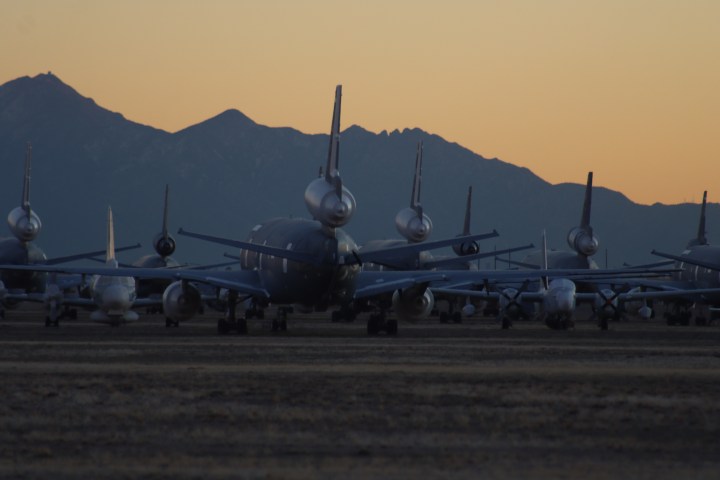
So no, you’re not technically allowed to wander in with a camera and a bottle of Gatorade. Davis-Monthan Air Force Base no longer rolls out the red carpet. No more tour buses. No more docents with the inside knowledge that feels like a conspiracy theory. The gate is closed, the signs are stern, and the Air Force doesn’t feel like playing host anymore.
But there’s a loophole: the desert doesn’t do secrets well. Dirt roads snake around the entire base, half-maintained and completely unbothered. You can drive right up to the perimeter fence in most spots. No security. No alarms. Just you, the sun, a thousand rattling cicadas, and several billion dollars’ worth of mothballed airpower sitting 30 feet away like it’s no big deal.
You’ll see rows of B-52s with their wings clipped, rusting Hercules transports with bird nests in the wheel wells, and the occasional jet cockpit staring back at you like it remembers things. The fence is thin. The temptation is strong. And the signs are very clear: do not cross. Not unless you want to meet someone with a buzzcut and a very low tolerance for “accidental tourism.”
Pro tip: bring binoculars, a full tank of gas, and a believable cover story, just in case someone official-looking decides to ask why you’re parked out there in the dust, squinting at military aircraft like you’re casing the joint.
You’re not trespassing. You’re just enthusiastically adjacent to history.
PINAL COUNTY AIRPARK
Where Planes Go to Vanish
If Davis-Monthan is orderly and official, Pinal Airpark is the opposite. This one’s in Marana, about 30 miles north. You won’t find gift shops or brochures. Just a long, baked stretch of fence, a few dust-smeared signs that say “PRIVATE PROPERTY,” and enough airplane bones to keep a kid twitching with joy.

During the Cold War, this place was used by the CIA for something called Intermountain Airlines—an airline that didn’t really fly passengers. Rumors say they launched covert missions from here. Real ones. Stuff involving Cuba, Laos, and those years America tries not to talk about.
These days, Pinal still has that ghost-town energy. You can drive along the outskirts and catch glimpses through the cracks in the perimeter. It’s quiet. Too quiet. Every few minutes, a gust of desert wind kicks up and makes it sound like a whisper from inside an empty hangar.
Pinal is where commercial jets go to sit. Or hide. Or get harvested for parts. You’ll spot 747s without noses, 737s missing wings, and a whole row of regional American Airlines CRJ-700s that look like they’re wearing sunburned uniforms from another era.
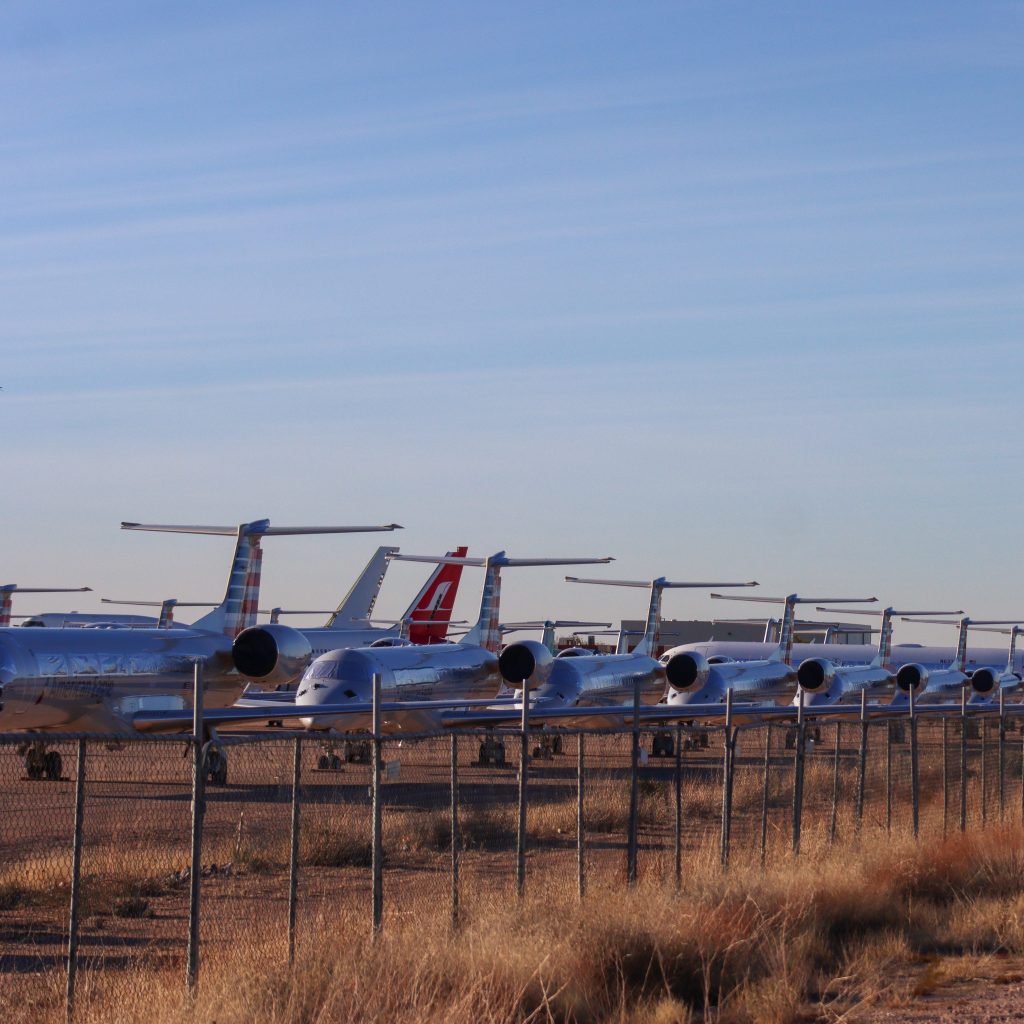

And no, you can’t walk in. Not legally. There are signs. There are cameras. There are probably drones watching you watch them.
But there’s always just enough room between the fence and the truth to make your curiosity dangerous.
THE LAWMAN’S LOOPHOLE
Pima Air & Space Museum Is Your In
When you need a break from imagining black helicopters, hit the Pima Air & Space Museum. This place is a playground for grown-up aviation nerds and kids who want to climb on something huge. You’ll walk past a B-36 Peacemaker, an SR-71 Blackbird, a collection of MiGs, and even a presidential aircraft that pre-dates Air Force One.
Here, the rules loosen. You can walk around outside. You can touch things. You can eat in the café and pretend you’re planning a mission over the Pacific. The heat bounces off metal and the wind smells like rust and sunscreen. It’s glorious. And weird.
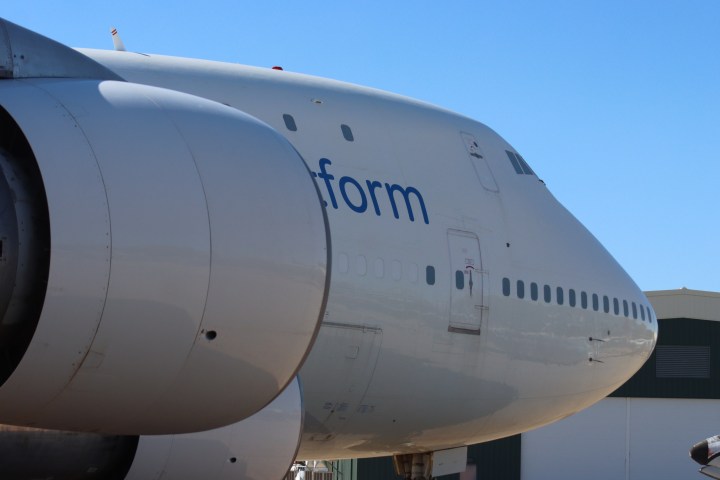
One exhibit features a Cold War missile pointed toward the ceiling. Another has a recon drone that looks like a flying lawn dart. The signs are informative. The staff are friendly. And the gift shop sells patches that say things like “I Brake for Bombers.”
You’ll leave full of facts, slightly sunburned, and 70% convinced that one of those planes still works and might fly away the second you turn your back.
TASTE THE DUST
Eat Like You’re on the Run
Forget the sad gas station snacks and pre-flight peanuts. You’re in Tucson now, and that means Baja Cafe—either on Broadway or Campbell. Both are close enough to the action and far enough from anything predictable.
Start with the Tucson Poutine. It’s what happens when desert people look at a pile of fries and ask, “But what if we weaponized it?” Smothered in shredded pork, cheese, crema, and—yes—red chile, which locals will often refer to with a shrug as “New Mexico sauce”. (It’s not a slur, it’s a territorial compliment.)
Pair that with one of their boozy coffee cocktails, which somehow manage to taste like both victory and bad decisions at the same time. Whether you’re leaning toward an Irish-inspired cream bomb or a Mexican mocha that could burn the rust off landing gear, Baja’s bartenders know how to make caffeine feel criminal.
The rest of the menu reads like a dare: pancake stacks the size of landing gear, Benedicts with altitude, and spicy specials that might get you flagged by TSA. The service is fast, the vibe is half diner/half fever dream, and the air conditioning hits like a moral reset.
And if you’re still standing after breakfast, Bisbee Breakfast Club is worth a detour. The biscuits are dense enough to survive re-entry and the gravy arrives in quantities that suggest the cook has unresolved feelings about the Cold War.
Fuel accordingly. You’ll need the calories if you plan to go pace the fence line and stare down history until it stares back.
THE DESERT IS WATCHING
Heat, History, and Hallucinations
The Arizona desert doesn’t want you there. It tolerates you. Barely. You’ll bake. You’ll dehydrate. You’ll wipe sand off your sunglasses and wonder if that plane just moved.
But if you like your travel served raw and just a little illegal, this is the place. These aircraft graveyards are full of ghosts—of war, of commerce, of everything America once flew too fast and too hard.
And that’s what makes it unforgettable.
AND THEN IT’S OVER AS SOON AS IT BEGAN.
By day three, the sun has reduced most visitors to something between beef jerky and a desert hallucination. Phones are dead. Maps are useless. Time becomes a vague suggestion. And just when the last bit of rational thought starts to melt, the sky offers a sign: a C-5 Galaxy roars overhead like a flying warehouse with opinions. It’s not just flying—it’s thriving, unlike all of it’s brethren on the ground.
This is not a place for your average tourist. Arizona’s aircraft graveyards aren’t attractions. They’re grit-scarred, heat-scorched rites of passage where history doesn’t rest so much as quietly stare you down through tinted cockpit glass.
Come here and you don’t leave the same. You leave sunburned, suspicious, and fully prepared to name your next child “Lockheed”. Lockheed-Martin? Okay, maybe just Martin.
VENTURE ON.
AND IF SOMETHING STARTS FOLLOWING YOU—DON’T LOOK BACK.
 Salta
Salta 